
Free Guide
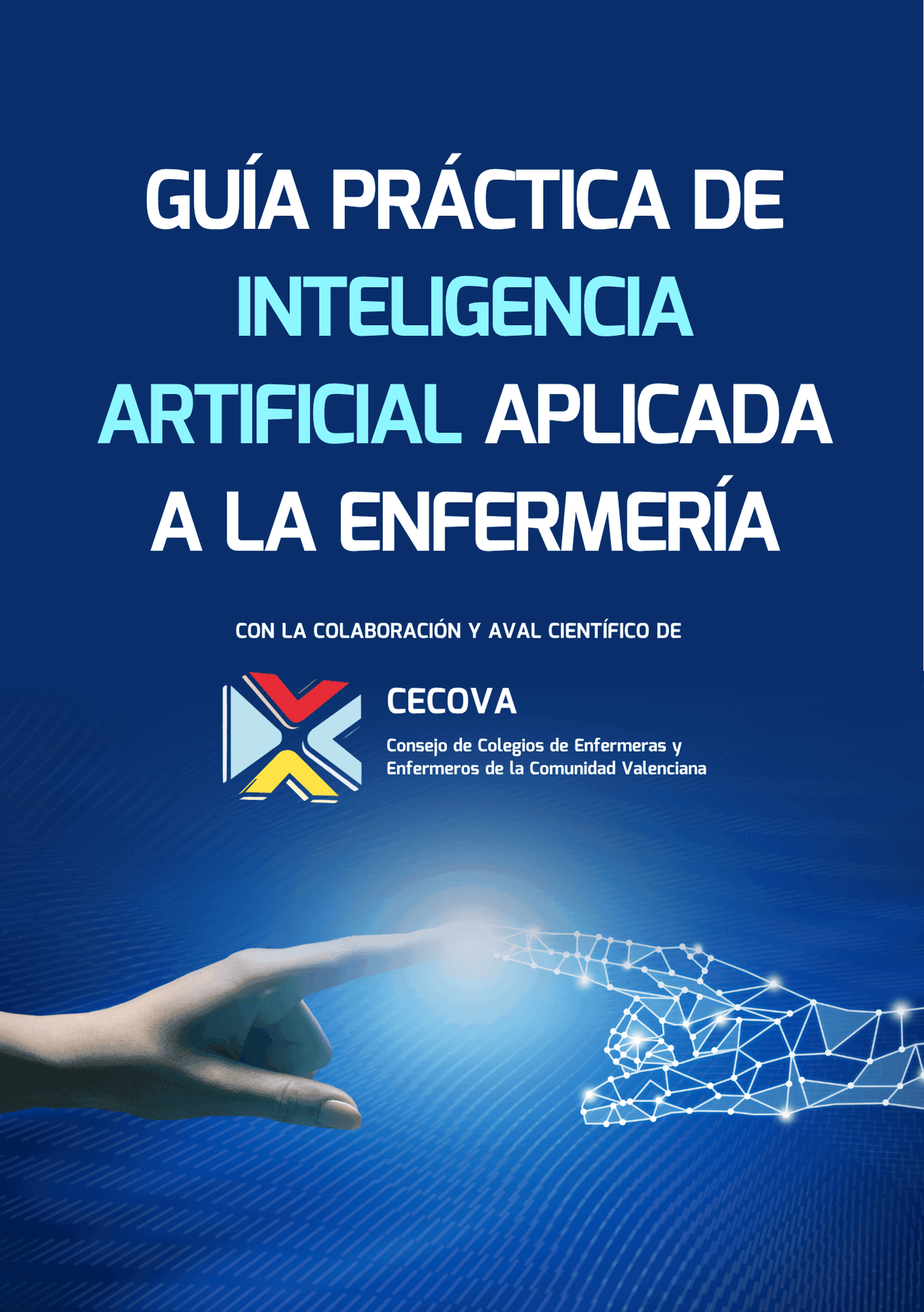
Artificial Intelligence for Nursing
What it can do for your work today, what you must not do with it, and where to start. Includes a free downloadable guide.
- Scientifically endorsed by CECOVA
- Perfect for a first introduction to AI
- Updated for 2025
As reported by iSanidad and Enfermería21. Written by Federico Juárez, Jorge Mora, Míriam Juárez, Antonio Illán and Ernesto Ibáñez.
The starting point
Your colleagues are already using it. Almost none of them feel ready
Nobody needs convincing that AI has arrived in healthcare. These three figures come from articles we published ourselves, each with its source inside.
71%
of healthcare professionals already use AI day to day. But 87% do not consider themselves trained for it, and a third rely on tools without CE marking.
Fenin 2026 study, 216 professionals
505,000
NHS England staff have been given an AI tool in the largest deployment ever made in healthcare. A third of its entire workforce.
NHS England, June 2026
81%
of doctors in the United States already use it in daily practice. That has doubled in three years.
Annual AMA survey
The limits
What you must not do with it, and why
These are not fussy rules. Each of the three has a measured reason behind it.
Never put patient data into public tools
A name, a record number or an admission date pasted into a free chatbot leaves your control and your organisation's. If the tool has not been approved by your IT department, it carries no patient data. None.
A third of healthcare staff use tools without CE markingDo not trust what it tells you about clinical matters
It gets things wrong, and it does so with great confidence. Anything it produces is checked before it reaches a patient, a record or a report with your name on it.
Half the medical answers from five chatbots were problematicDo not use it to find references
It invents citations that look real, with authors and journals that do not exist or never wrote that. If you are going to cite something, go to the source.
JAMA advises against it explicitly in its guidanceFirst steps
Where to start if you have never touched it
No patient data, nothing to install, and no permission needed.
- 1
Start with things that carry no patient data
Making sense of a paper you are struggling with, preparing a clinical session, drafting a talk or a poster for your unit, studying for an exam. You learn there without risking anything.
- 2
Learn how to ask
The difference between a useless answer and one that saves you half an hour is almost always in how you ask: who you are talking to, what you want, who it is for and in what format. That takes an afternoon to learn.
- 3
Always check, and say so
Treat it like someone who has just joined the unit: they may well be right, but you verify before acting on it. And if a text was written by an AI, say so.
Training
And if you want to go further
Two routes, depending on how much time you can give it.
Master's in Artificial Intelligence for Healthcare Professionals
60 ECTS accredited by UCAM, seven months, fully online. In collaboration with the Spanish National Conference of Deans of Nursing.
Short courses
If you would rather start with something shorter before committing to a master's.
Download your free guide
Leave your details and we'll send the guide to your inbox.